



A roof leak rarely announces itself with a dramatic downpour through your ceiling. In most cases, the damage begins quietly — a faint discolouration here, a slightly musty smell there — and builds over weeks or months before anyone notices. By the time water is visibly dripping into your living space, the underlying structure has often been deteriorating for far longer than you would expect. For Dublin homeowners dealing with persistent rain and wind-driven moisture, understanding what to look for early can be the difference between a straightforward repair and a costly structural intervention.
Why Early Leak Detection Matters
A small roof leak left unchecked will not stay small. Water follows the path of least resistance, travelling along rafters, noggins, and ceiling joists before emerging far from the original point of entry. What starts as a hairline crack in a flashing or a lifted membrane edge can, within a single winter, lead to rotting structural timbers, widespread mould growth behind plasterboard, and even electrical hazards where water reaches wiring or light fittings.
There is also the insurance angle. Many home insurance policies require that properties are properly maintained. If an insurer can demonstrate that a leak was left unattended for an extended period, they may reduce or refuse a claim for consequential damage. Early detection protects both your property and your cover. If you are already aware of an issue you have been putting off, our article on delaying roof repairs explains why acting sooner is always the better decision.
7 Warning Signs Your Roof Is Leaking
1. Damp Patches or Water Stains on Ceilings
The most recognisable sign of a roof leak is a brownish, ring-shaped stain on your ceiling. These marks tend to appear pale at first and darken after repeated wetting. They are often most noticeable after heavy rainfall, expanding slightly each time before drying out again. Bear in mind that water can travel a considerable distance along timbers before dripping down, so the stain on your ceiling may not be directly below the actual leak point on the roof.
2. Musty or Damp Smell in Upper Rooms
Even when there is no visible water, trapped moisture in your roof space or within the ceiling void creates a distinctive musty odour. This smell is most apparent in attic rooms, top-floor bedrooms, and enclosed spaces near the roofline. If you notice a persistent damp smell that worsens during or after rain, it is a strong indicator that moisture is entering from above — even if you cannot yet see where.
3. Peeling, Bubbling, or Discoloured Paint
When moisture gets behind a wall or ceiling surface, it disrupts the bond between paint and substrate. You may notice paint beginning to blister, bubble, or flake away. Wallpaper can peel at the edges or develop dark patches. Plaster may show yellowish or grey discolouration. These symptoms are easy to dismiss as cosmetic issues, but they almost always point to a moisture source that needs investigation.
4. Visible Mould or Mildew Growth
Black or dark green spots appearing on walls, ceilings, or in the corners of rooms near the roofline indicate persistent, ongoing moisture. Mould requires sustained dampness to establish itself — an occasional splash of condensation is not enough. If mould is growing in upper rooms or near the ceiling, water is getting in from somewhere above. Beyond the structural concern, airborne mould spores pose a genuine health risk, particularly for children, the elderly, and anyone with respiratory conditions.
5. Daylight Visible Through the Roof Structure
This one is straightforward but often overlooked. If you climb into your attic space during the daytime and can see pinpoints of light coming through the roof covering, those gaps are just as accessible to rainwater. Even tiny openings around nail holes, cracked slates, or displaced ridge tiles can admit enough water over time to cause significant damage to insulation, timbers, and the rooms below.
6. Ponding Water on Flat Roof Surfaces
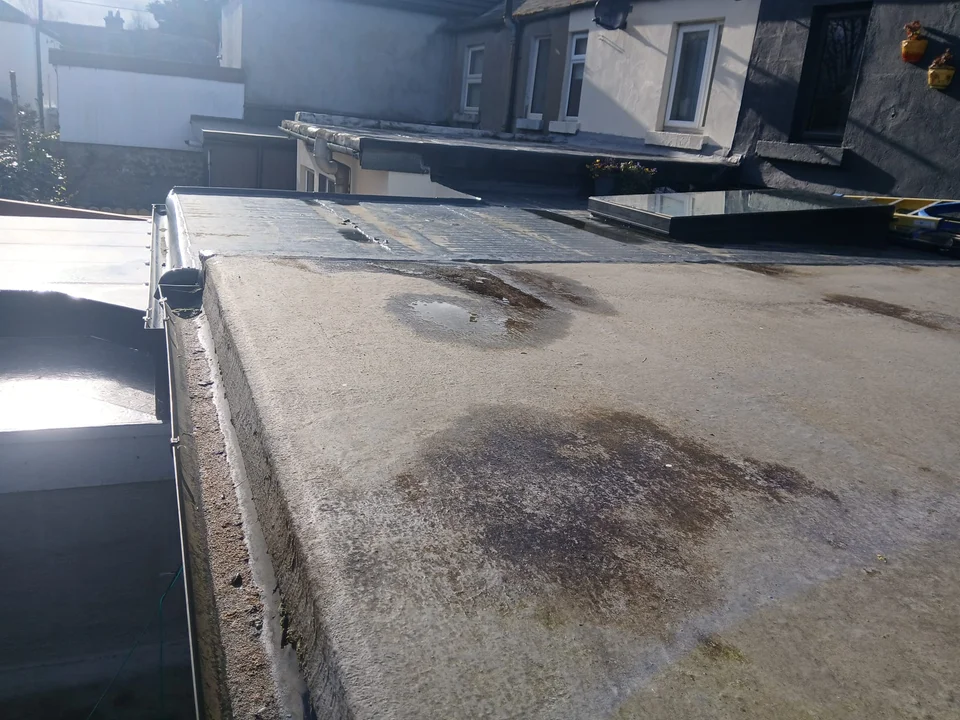
If your property has a flat roof — whether over an extension, a garage, or a commercial unit — standing water that does not drain within 48 hours is a serious warning sign. Ponding indicates that the roof falls are insufficient, the drainage outlets are blocked, or the membrane has begun to deform. Left unaddressed, ponding water accelerates membrane degradation, increases the load on the roof structure, and will eventually find a way through. Our flat roof waterproofing service addresses the root cause by restoring proper drainage and applying durable membrane systems.
7. Unexplained Rise in Heating Costs
This is the least obvious sign, but one of the most telling. When roof insulation becomes wet — whether from a leak above or condensation caused by a breach in the vapour barrier — it loses its thermal performance dramatically. Wet insulation can retain less than half of its designed R-value. The result is a room that never seems to warm up properly and a heating bill that creeps steadily upward without any change in your usage habits.
What to Do When You Spot These Signs
If any of the warning signs above are present in your property, the worst thing you can do is ignore them. Roof leaks do not resolve themselves — they only get worse, and the cost of repair increases with every month of delay.
Start by documenting the damage. Take clear photographs of stains, mould growth, paint damage, or any visible water. Note the date and weather conditions. This evidence is valuable both for your roofing contractor’s assessment and for any insurance claim you may need to make.
Then call a professional. A qualified roofing contractor can identify the source of the leak, assess the extent of any hidden damage, and provide a clear scope of repair. Our roof leak repair in Dublin service includes a free on-site inspection where we trace the leak to its origin, evaluate the condition of the surrounding structure, and provide a fixed-price quotation before any work begins. Dublin homeowners can book a roof repair in Dublin with same-day availability for urgent situations.
Do not attempt temporary fixes with sealant or tape from a hardware shop. These may mask the symptoms for a few weeks but will not address the underlying problem — and they can make the eventual professional repair more difficult.
How a Professional Identifies the Source
Finding the exact point of water entry is not always straightforward. A professional roof inspection typically begins with a thorough visual examination of the entire roof surface, checking for cracked or missing slates, lifted flashings, deteriorated mortar at verges and ridges, and any signs of membrane failure on flat sections.
Special attention is given to the most vulnerable points: valleys where two roof planes meet, abutments where the roof meets a wall, penetrations around soil vent pipes and extract fans, and upstands at the edges of flat roofs. These junctions account for the majority of roof leaks because they involve transitions between materials, each with different expansion rates and weathering characteristics.
The contractor will also assess the substrate condition beneath the outer covering, check drainage routes for blockages or inadequate falls, and inspect the attic space from inside for signs of water tracking. Once the source is confirmed, you receive a detailed report and a fixed-price quotation for the recommended repair — so you know exactly what to expect before any work begins.
Spotted Any of These Warning Signs?
Don’t wait for a small leak to become a major repair bill. Our team provides free on-site roof inspections across Ireland with same-day availability for emergencies.
Ready to protect your property?

