



Every roof has a finite lifespan — but that lifespan is not fixed. The difference between a roof that fails after 10 years and one that performs for 30 or more comes down to three things: the materials used, the quality of installation, and how well it is maintained over time. In Ireland’s demanding climate, getting these three factors right can add decades of reliable service to virtually any roof type.
Understand Your Roof’s Natural Lifespan
Before you can extend your roof’s life, you need to understand what you are working with. Different roofing systems have very different baseline lifespans when left unmaintained:
- Traditional felt flat roofs — 8–15 years before joints split and water ingress begins
- Single-ply membrane (EPDM/TPO) — 15–25 years depending on UV exposure and installation quality
- Liquid-applied waterproofing (LAVA 20) — 20–25+ years with proper application and periodic inspection
- Metal profiled roofing — 25–40 years, but vulnerable to corrosion at fixings, laps, and cut edges
- Asbestos cement sheeting — structurally sound for 40–60 years, but surface deterioration and fibre release require professional encapsulation
- Natural slate — 75–100+ years, though flashings and valleys fail much sooner
The key insight is that roofs rarely fail across the entire surface at once. They fail at weak points — joints, edges, flashings, penetrations, and drainage outlets. Protecting these weak points is how you extend the whole roof’s life.
Apply a Protective Coating System
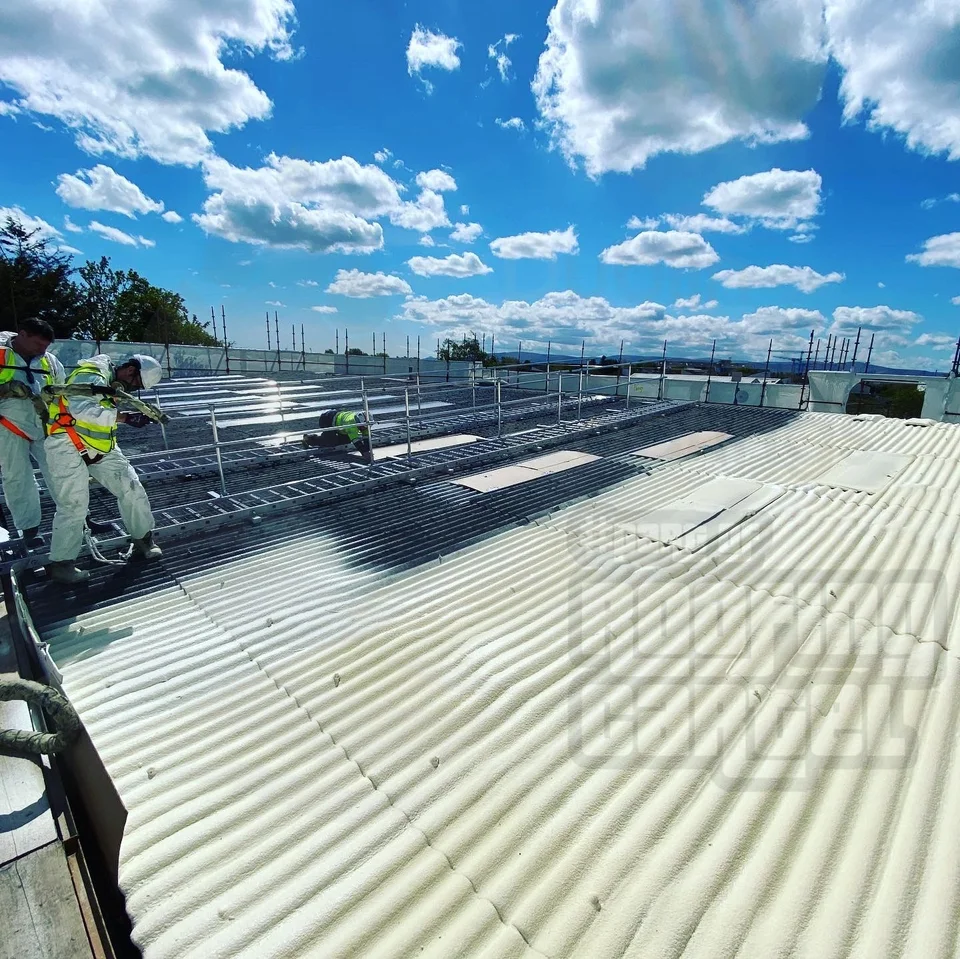
The single most effective way to add decades to an existing roof is to apply a professional protective coating. Rather than stripping and replacing the entire roof, a liquid-applied system bonds directly to the existing surface and creates a new, seamless waterproofing layer.
This approach works on:
- Flat roofs — LAVA 20 waterproofing creates a monolithic membrane with no joints or seams to fail, adding 20+ years of protection over existing felt, concrete, or asphalt surfaces
- Metal roofs — specialist metal roof coatings seal corroded fixings, lap joints, and cut edges while providing UV and weather protection
- Asbestos roofs — encapsulation coatings seal the surface, prevent fibre release, and waterproof the roof in a single operation — without the cost and disruption of removal
The advantage of coating over replacement is significant. You avoid the expense of stripping the old roof, skip landfill disposal costs (critical for asbestos), and the work is completed faster with less disruption to the building’s occupants.
Choosing the Right Coating
Not all coatings are equal. The system you choose should be matched to your roof type, its condition, and the performance you need:
- LAVA 20 — liquid-applied, flexible, UV-resistant. Ideal for flat roofs, valley gutters, and complex detailing
- Polyurea — rapid-curing, extremely tough. Best for high-traffic areas, industrial roofs, and surfaces that need chemical resistance
- Acrylic coatings — budget-friendly but shorter-lived. Suitable only for temporary protection or low-priority structures
A free professional roof survey will determine which system is the right match for your property.
Maintain Drainage — The Most Overlooked Factor
If you do nothing else, keep your roof’s drainage working. More roofs in Ireland fail from poor drainage than from any other cause. Standing water accelerates every form of deterioration — it degrades coatings, rots timber decking, corrodes metal fixings, and adds structural load that flat roofs are not designed to carry permanently.
A twice-yearly drainage maintenance routine takes less than an hour and can prevent thousands in damage:
- Clear all gutter outlets and hoppers — remove leaves, moss, and debris that accumulate through autumn and winter
- Check downpipes for blockages — run water through them and listen for restriction at bends
- Inspect internal drainage channels — flat roofs with internal drainage are especially vulnerable to hidden blockages
- Verify water flow — after clearing, confirm that water reaches the drainage points and does not pond on the surface
- Trim overhanging vegetation — branches deposit leaves directly into gutters and can abrade roof surfaces in wind
If your flat roof has persistent ponding — water that remains more than 48 hours after rainfall — the falls may need correcting with tapered insulation before any new waterproofing is applied.
Inspect Regularly and Act Early
The cheapest roof repair is always the one you catch early. A small crack in a flashing, a lifted edge detail, or a blocked outlet costs very little to fix when spotted promptly. Left for six months, that same issue becomes water-saturated insulation, stained ceilings, and a repair bill ten times larger.
Our article on why you should never delay roof repairs explains this progression in detail — and why the cost curve of deferred maintenance is so steep.
Recommended inspection schedule:
- Spring (March–April) — check for winter storm damage, clear gutters after leaf fall
- Autumn (September–October) — prepare drainage for the wet season, inspect sealants and flashings before temperature drops
- After any major storm — visual check for displaced materials, blocked outlets, or new leaks
You do not need to access the roof yourself for every inspection. A good pair of binoculars from ground level can reveal most surface issues. For a thorough assessment, professional inspections are available at no cost from our team.
Address Flashings and Edge Details
Flashings — the metal or sealant strips where the roof meets walls, parapets, pipes, and other penetrations — are the most common failure point on any roof. They are also the most cost-effective element to maintain.
Common flashing failures include:
- Lead flashings lifting from mortar joints — wind and thermal movement work the lead loose over time
- Sealant cracking at pipe penetrations — mastic sealants have a limited lifespan and must be renewed periodically
- Edge trims separating — the perimeter of a flat roof takes the most wind load and weather exposure
- Valley gutters silting up — valley gutter repairs are essential because blocked valleys force water under adjacent roof surfaces
Repairing a flashing costs a fraction of replacing the roof section it protects. Including flashing checks in your regular inspection routine is one of the highest-return maintenance activities you can perform.
Improve Ventilation and Insulation
A roof that cannot breathe will deteriorate from the inside. Trapped moisture in the roof void leads to condensation, which causes:
- Timber rot in rafters and decking
- Mould growth on internal surfaces
- Reduced insulation performance (wet insulation is effectively useless)
- Corrosion of metal fixings and straps
Proper ventilation allows moisture to escape before it causes damage. For flat roofs, this may mean ensuring breather vents are clear and functioning. For pitched roofs, eaves and ridge ventilation should provide continuous airflow.
Insulation works hand-in-hand with ventilation. Well-insulated roofs reduce condensation risk by keeping the roof structure above dew point temperature. They also reduce heating costs — a properly sealed and insulated flat roof pays for itself through energy savings over time.
Plan Ahead — Maintenance vs Emergency
The final principle is simple: planned maintenance always costs less than emergency repair. When you maintain your roof on a schedule, you control the timing, the budget, and the quality of work. When you wait for failure, you pay premium rates for urgent call-outs in poor conditions.
Our flat roofing tips guide covers the practical steps to keeping costs down, and our article on choosing the right roofing contractor will help you find a reliable professional when the time comes.
A roof that receives regular attention, timely repairs, and the right protective coating is a roof that will serve your property for decades beyond its expected lifespan. The investment is modest. The return is enormous.
The best time to protect your roof was the day it was installed. The second best time is today. Every month of exposure without protection shortens your roof’s remaining life. A professional coating applied now can reset the clock entirely.
Find Out How Long Your Roof Will Last
Wondering what condition your roof is really in? We provide free, no-obligation roof surveys across Dublin and Ireland. Our team will assess your roof’s current state, estimate its remaining lifespan, and recommend the most effective way to extend it — whether that’s a targeted repair or a full LAVA 20 waterproofing system.
Give your roof the protection it deserves.


